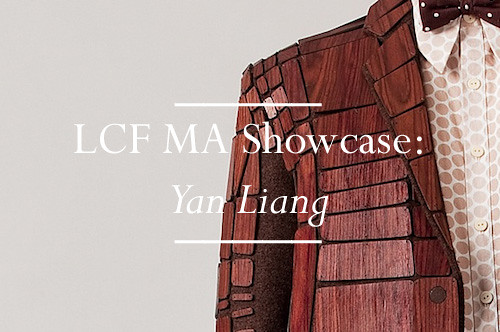
LCF MA Graduate Showcase: Yan Liang


Last week saw the first crop of fashion design graduates showcase their talents with the LCF MA show. It was a feast of menswear. Out of this year's crop of twenty two showing students amazingly fourteen were from the menswear discipline. To celebrate the cream of incoming crop of graduates we aim to speak to each of our favourite students to learn more about their collections and their experiences at LCF. We kicked off this year's series with prize winning Matteo Molinari but now we turn our attentions to the wood craft of Yan Liang.

Liang's research focused on the interaction and relationship between disease and wood. Through examining the unique and unusual malformations and deformed trees she translated a collection which mixed fabric and raw material to stunning effect. Here we talk to the design talent to learn about her experiences at LCF and his hopes for the future...
----------

SS: Firstly, congratulations on more than playing your part in a dazzling, menswear rich MA show. How did it feel seeing your finished designs on the catwalk?
Yan Liang: I felt relaxed when I saw my designs on the stage and found it to be enjoyable as well, because this was my moment and everybody was watching my designs during these two minutes. Though there was a small issue in that some of the outfits were forgotten but all in all, the whole process of my part within the show was memorable.

SS: Describe the moment you realized you wanted to be a menswear designer?
Yan Liang: I was a designer doing both womenswear and menswear during my BA time. When I first started my research in my MA course I realized menswear needed more attention and focus in the small details of design. The technique of pattern cutting and the control of silhouette were both important as the concept of design. I like challenges which lead me to become a menswear designer.
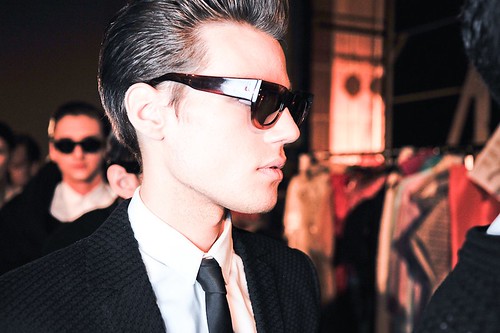
Backstage photography by Morgan O'Donovan

SS: What attracted you to the LCF MA course in particular? What was the best thing about your course? And the worst?
Yan Liang: After my graduation of BA course in Shanghai I had a plan to have a further education overseas because I wanted my designer horizon to be international. LCF was my first choice because I watched a fashion show in shanghai in 2008 which was about the all the outstanding collection of LCF MA students. That was amazing and strongly affected my application of LCF MA course.

I think the best thing of my course was I had a chance to develop a design from the original concept to final pieces. I can do everything by myself and learnt a lot. What’s more, we had an opportunity to cooperate with an industry company which made it became a little competition to get selected.

I don’t think there is a worst part of my course because every part of the course exists for a reason. If I have to choose a weak one that was both womenswear and menswear were mixed during teaching in our year which was not a huge benefit for all of the students. But I heard the university already changed this situation this year and separated menswear and womenswear.

SS: The menswear on show this year was so strong. I was amazed to see that fifteen of the twenty two graduates selected studied menswear. Aside from your own, which was your favorite of the graduate collections?
Yan Liang: I like Matteo’s collection most and he won at the end. He came from a theory background but became a fashion designer. That was really praiseworthy because we all knew that was hard. We all saw his growing of designs and he worked so hard. Many people supported him and so did I.
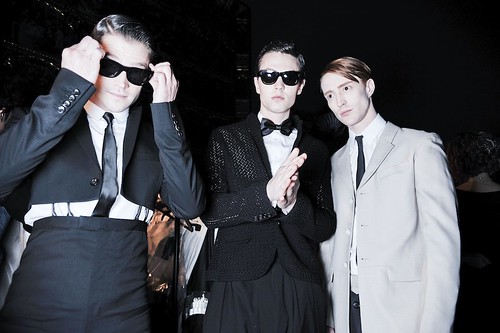
Backstage photography by Morgan O'Donovan

SS: Now on to your collection itself. Mixture experiments with fabric and raw materials in a stunning way. Can you talk us through the inspiration for the collection?
Yan Liang: This collection is called Mixture because it explores diversity. Fresh ideas about new fabrics and raw materials were mixed in this collection. Most natural substances are mixtures. Some elements may seem irrelevant. However, an effective collision of different elements may produce a new thing when they are driven by external forces. The new creature is the mixture. This collection used the idea of mixture to combine several elements which show different angles of relation.

SS: Your research focused on comparing malformation and deformed trees. What was your starting point and how did the the collection evolve in to what we saw today?
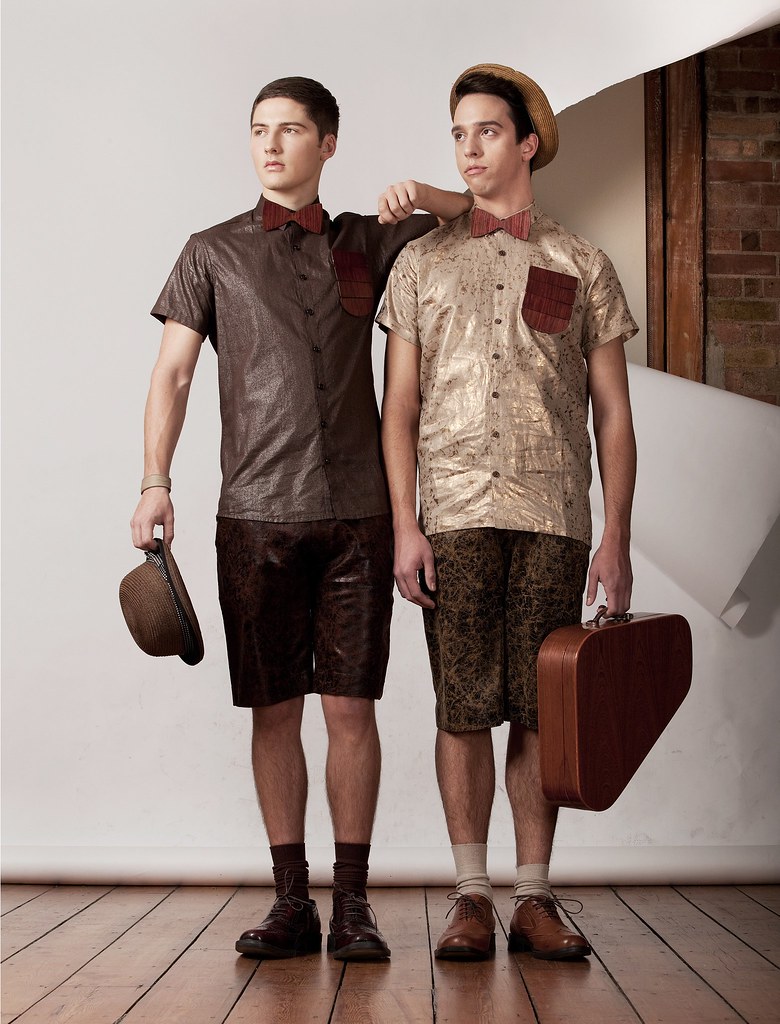
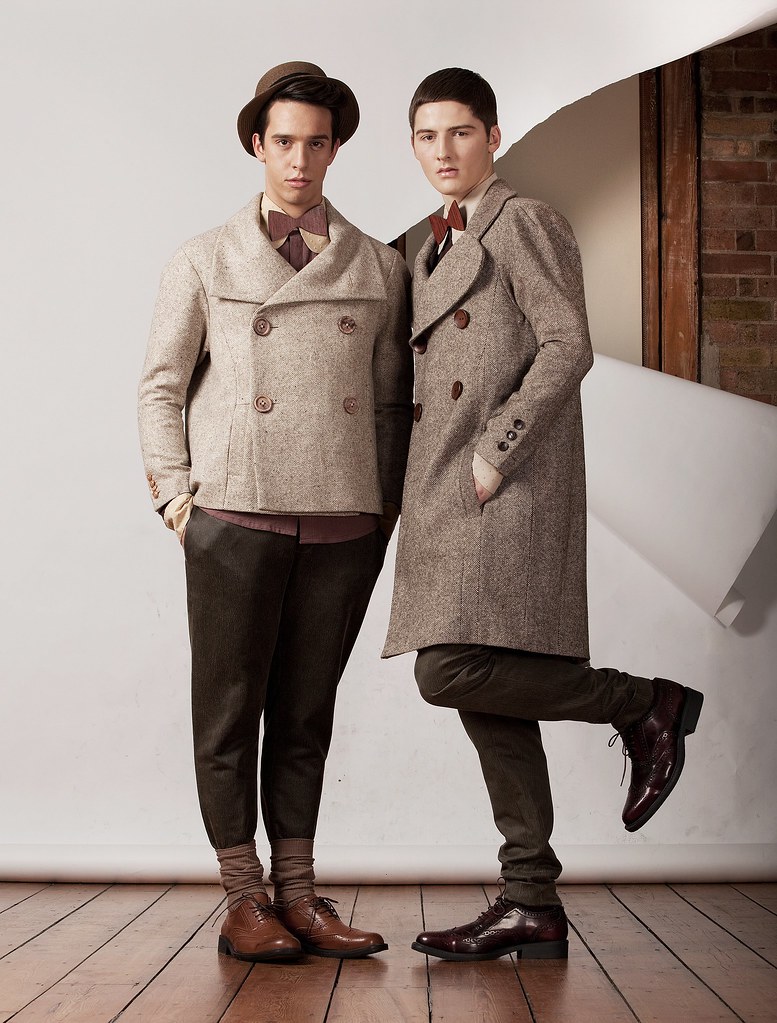
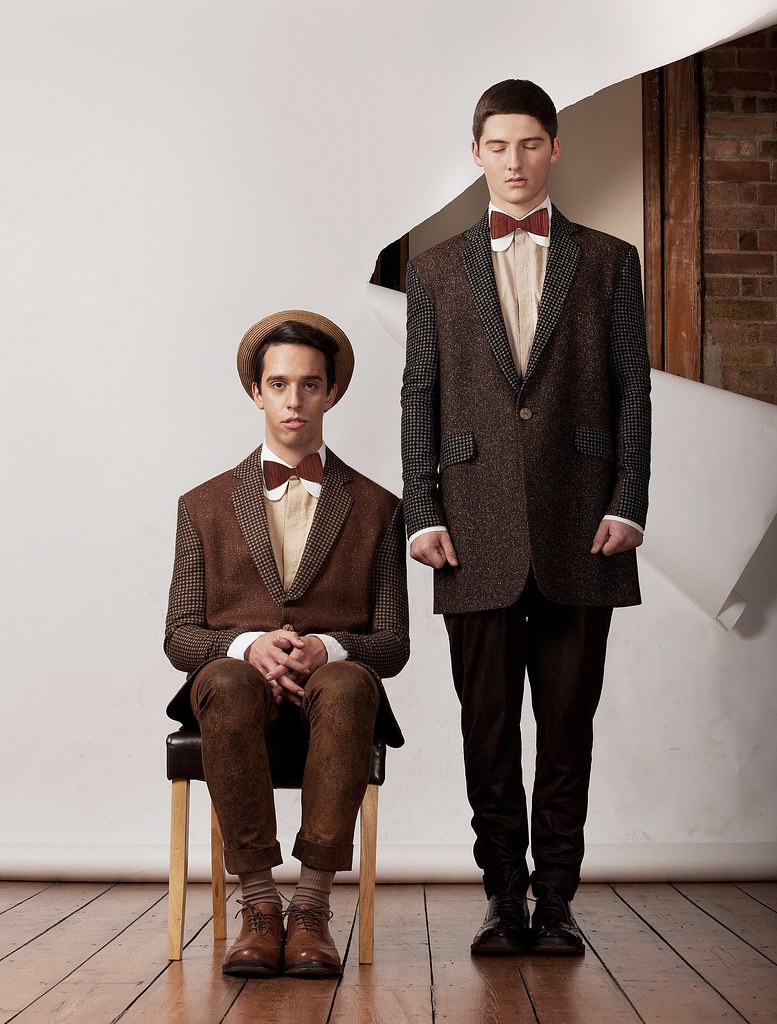
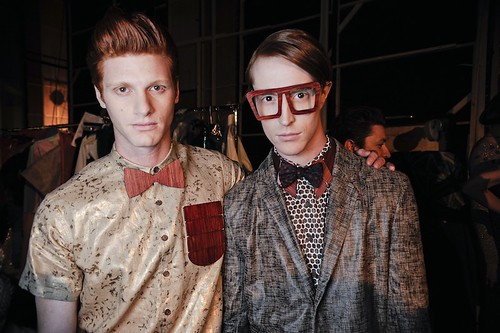
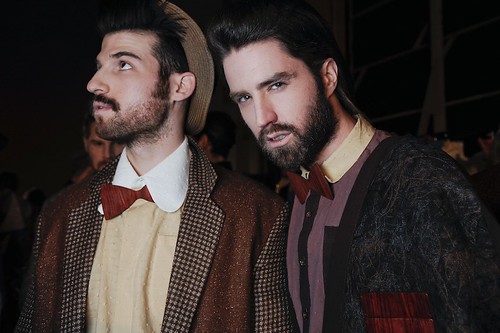
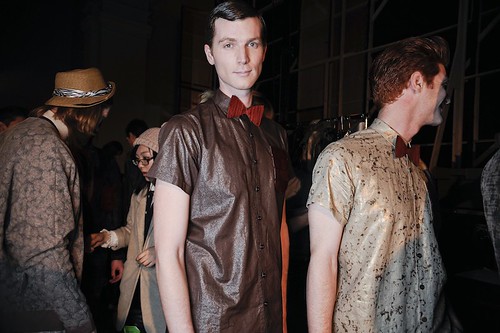
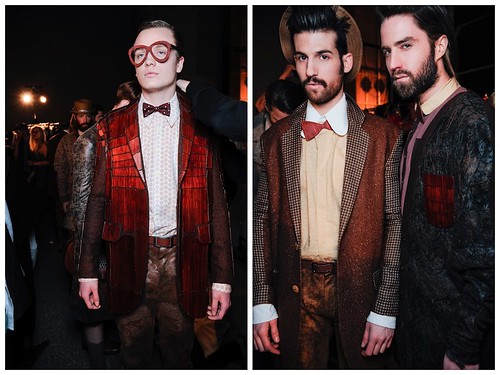
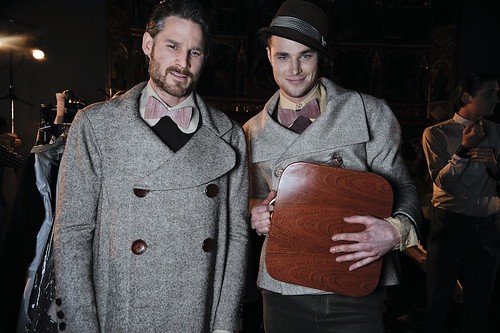
Yan Liang: My research focused on the interaction between two elements – in this case I looked at the relationship between disease and wood – examining the unique and unusual malformations and deformed trees. This translated in producing a collection which mixed fabric and raw material. I decided to use wood to work with other fabrics. There were several kinds of techniques to get the effect of wood to make garments. One of the techniques was to use real wood. Wooden pieces were sewed onto garment in the same way as sewing a button or crystal. There was another technique which used other materials to imitate the effect of wood. People used digitally techniques to coat the pattern of wood on leathers or polyester to make fabric looks like wood. By using these techniques, the collection is characterised by a jacket made of beautifully warm toned wood and accessories like bow ties also made of wood. This has given the collection a playful and humorous edge – but it still remains elegant and chic.
Backstage photography by Morgan O'Donovan

SS: How would you describe the collection in your own words?
Yan Liang: Garments can be made from anything.

SS: The collection uses fabrics and materials that you wouldn't normally associate with menswear. How difficult were the substances to work with?
Yan Liang: It was not easy. The steps were:

Shape confirm - Paper toile - Separated pieces toile - Dye material - Cut material - Paint edge - Dig holes - Hand stitch - Hand stitch lining - Care method - Finishing - Even the Technique of woody box was difficult as well.

I made the wooden jacket all by myself which took me nearly two months to finish them. That is why I don’t have more time to make more jackets which are made of wood.

SS: What type of man can you see wearing your designs?
Yan Liang: I think this collection has a playful and humorous edge – but it still remains elegant and chic. So anyone who like humorous designs would wear them.
Backstage photography by Morgan O'Donovan

SS: I know this is difficult question to answer but have you got a favourite, anything that you were most proud of?
Yan Liang: A lot of people told me they like my first wooden jacket and they want to buy it which I was really proud of.

SS: What advice would you give a prospective menswear fashion student?
Yan Liang: Trust the voice inside of your mind. And nothing will be too crazy.

SS: Finally, what would you like to achieve in 2011 and beyond?
Yan Liang: I’d love to do more designs to express myself and explain what I want to say.
Backstage photography by Morgan O'Donovan
----------

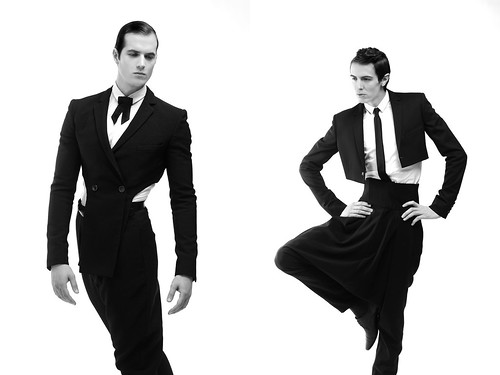
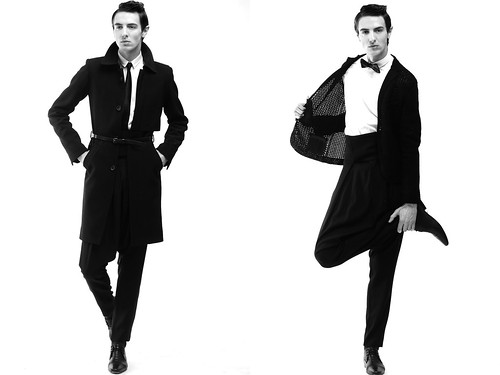
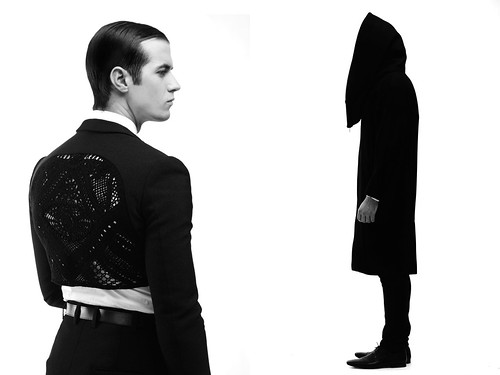
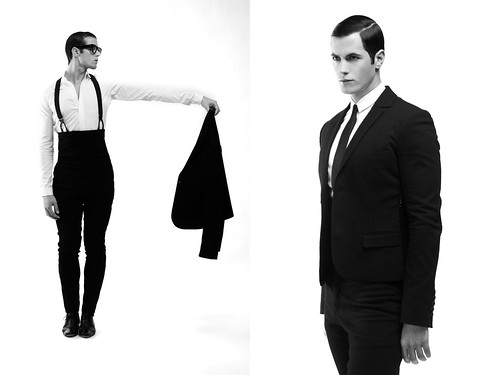
Yan Liang's collection undoubtedly has a playful and humorous edge but at the same time, her designs remain chic and elegant. The various techniques and processes used to create the effect of wood in various forms and states whilst still creating covetable pieces of wearable clothing, showcase her immense skill. 'll leave you with these fantastic look book shots by Raymond T...
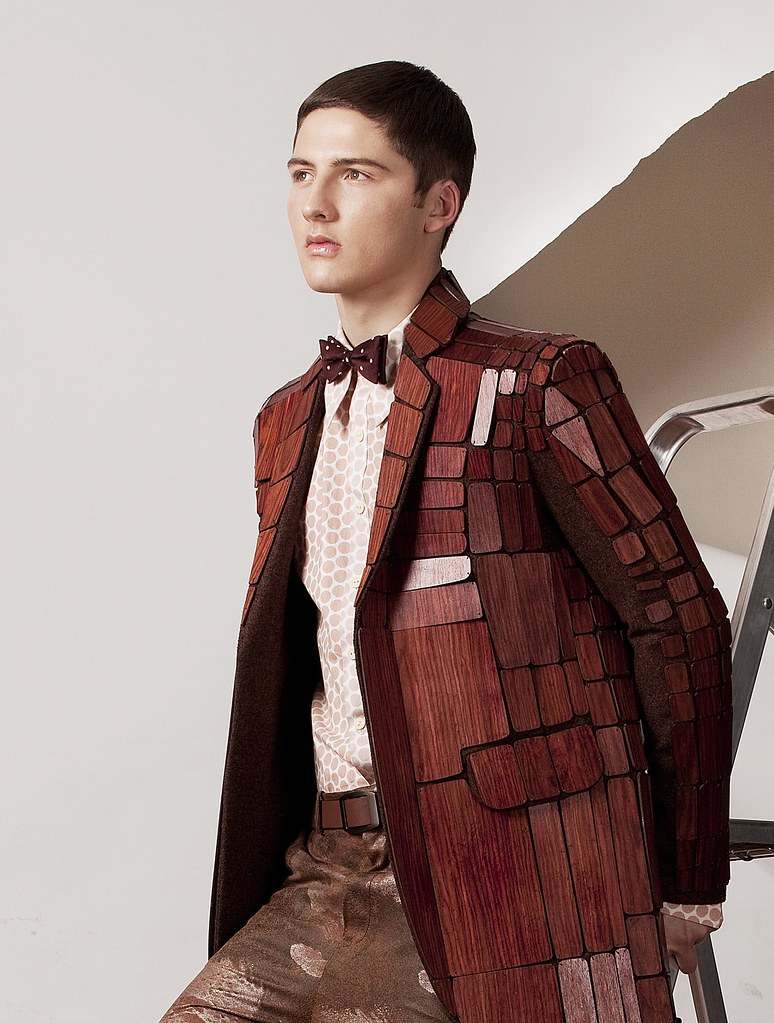
Photography by Raymond T, hair and make up by Pace with Tommy and Patrick as models

LCF MA Graduate Showcase: Matteo Molinari


Last Wednesday saw the first crop of fashion design graduates showcase their talents with the London College of Fashion MA show taking place in the ornate rooms of the V&A. It was a true celebration of emerging menswear design talent and certainly whet this blogger's appetite for the year ahead. To celebrate the cream of incoming crop of graduates we aim to speak to each of our favourite students to learn more about their collections and their experiences at LCF. First up, Matteo Molinari.

It was Matteo Molinari's crocheted tailoring and reimagined classics that made the biggest impact on the graduation catwalk and ultimately saw him walk away with the grand prize. His highly desirable and beautifully tailored collection fused modern tailoring with traditional craftsmanship to stunning effect. Drawing inspiration from his childhood fascination for the small dots, lines and circles printed onto white paper that his mother and sisters used to create crochet lace. Here, Molinari created patterns which were converted into pieces of crochet and put into panels of this largely sophisticated black and white pieces. This complex technique of combining crochet into the luxurious menswear fabric creates a dichotomy between what is traditionally seen as masculine and feminine. Here we talk to the design talent to learn about his experiences at LCF and his hopes for the future...

----------

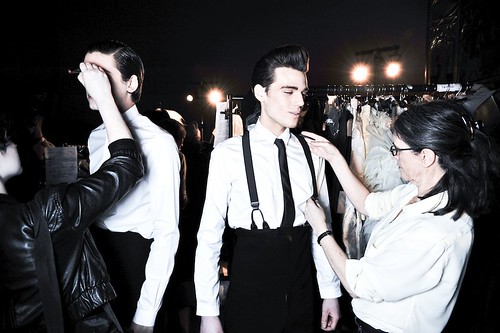
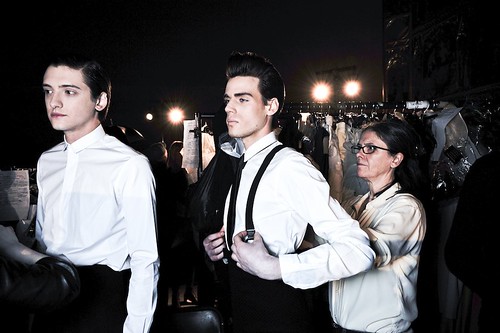
Applying the finishing touches to Matteo Molinari's prize winning collection. 
Backstage photography by Morgan O'Donovan

SS: Firstly, congratulations on more than playing your part in a dazzling, menswear rich MA show. How did it feel seeing your finished designs on the catwalk and ultimately winning the main prize?
Matteo Molinari: I felt honoured to have been chosen to be part of the V&A show. It’s a real event with press, buyers and huge media coverage. When I heard my name I was shocked and very happy at the same time.

SS: Describe the moment you realized you wanted to be a menswear designer?
Matteo Molinari: During adolescence I started to be interested in fashion, but it was a very long path for me to come to the complete acceptance that I wanted to be a designer. My previous degrees were a Communication BA and an MA in Philosophy of the Languages. It was only after these experiences that I started to work as a freelance design consultant and then began my Fashion Design and Technology MA.

Applying the finishing touches to Matteo Molinari's prize winning collection. 
Backstage photography by Morgan O'Donovan

SS: What attracted you to the LCF MA course in particular? What was the best thing about your course? And the worst?
Matteo Molinari: LCF is famous for being well connected with the industry and well known for the high level of technical skills you can learn at this college. The tutors, lecturers and the technicians are very well trained and experienced, I learn so much from everyone of them and my collection is a reflection of my knowledge path. The only bad thing about my Masters is that there are so many things to do in so little time. Fifteen months is such a short time and this pushes you to work 24/7.

SS: Can you talk us through the inspiration for the collection?
Matteo Molinari: Usually young designers are experimenting more with shapes, extreme styles and eye-catching proposals and weird looks. Keeping this in mind, I tried to be different and began with the traditional male wardrobe, working on the essentials of menswear: the suits, the trench-coat, the coat and the white shirt. I changed proportions and I elaborated a personal silhouette: sharp for tailoring, structured and architectural for the coats adding the cross-gender twist of using handmade lace in a graphic and masculine way.

I’ve been focused on tailoring and hand-made crafts because these elements are a huge part of my Italian heritage. It sounds like a stereotype but I pay so much attention in the pattern cutting process to get the shapes I wanted. The silhouette is distinctive and the cut of the clothes accurate and thoughtful. The quality of the clothes was a central element. The structure of the collection reflects it: just tailored pieces, coats, trench coats, shirts and high waist trousers, no fancy or over styled outfits.

Backstage photography by Morgan O'Donovan

SS: What was your starting point?
Matteo Molinari: I started analyzing the meaning and the implication of symbols in the actual garment design.

SS: How would you describe the collection in your own words?
Matteo Molinari: Black, tailored, sinister, handmade, Psychic Youth, crochet lace, architectural shapes, androgynous, cut, cropped, NON, reworking men's wardrobe basics, European folk traditions.

Stunning detailing.
Backstage photography by Morgan O'Donovan

SS: Personally, I love the balance struck between traditional tailoring and textile techniques rarely used in menswear. One of the best examples of this is the crochet back tuxedo jacket. Could you talk us through some of the techniques used, for example the hand made crochet and your attraction to them?
Matteo Molinari: I was amused by the notation used to transcript the movements necessary to produce a piece of crochet lace. Small dots, lines and circles are printed on a white page to create intricate and beautiful pieces of work, if correctly interpreted by a skilled artist. I developed my patterns starting from the crochet panelling. I used crochet not like an embellishment but as a important part of the pattern. Crochet is a feminine technique, a knowledge shared between mothers and daughters in Italy. Doing menswear based on it pushed me to reflect about a lot of social and cultural implications related to gender. Not merely cultural concept of masculine and feminine but differences between art and craft and the unnatural.

SS: What type of man can you see wearing it?
Matteo Molinari: Confident and cerebral with a melancholic spirit.

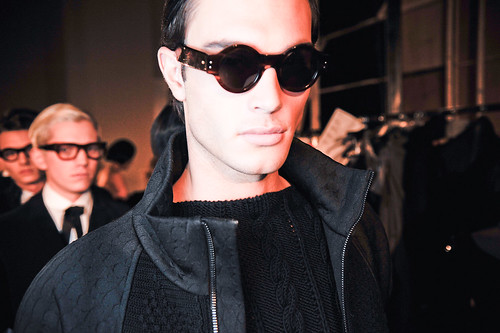
A closer look
Backstage photography by Morgan O'Donovan

SS: I know this is difficult question to answer but have you got a favourite, anything that you were most proud of?
Matteo Molinari: The crochet back tuxedo jacket.

SS:Finally, what would you like to achieve in 2011 and beyond?
Matteo Molinari: Be free to decide what I care and what I don’t. Continue doing clothes for my SS 2012 collection. Be passionate in what I’m doing.

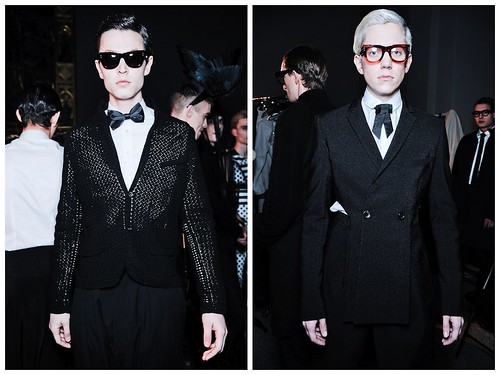
Two of Molinari's models mingling with the other collections.
Backstage photography by Morgan O'Donovan
----------

In addition to creating a collection that makes your heart skip a beat or two, Molinari's desire to breathe fresh life and excitement in to traditional skills and techniques should be applauded. The detailing of the pattern cutting, the sharp fit and the mixture of Italian manufacture, japanese fabrics, hand stitching and crochet produced by close family members makes this collection both luxurious and desirable but also hugely personal and emotional. I'll leave you with these fantastic look book shots by Christopher Agius Burke...

Photography by Christopher Agius Burke. Hair and makeup by Pace Chen.

Matteo Molinari’s collection will be available to order and a line of sunglasses and glasses is already available. I just can't wait to see this talent develop.

Experimenting with Bunney

Dipping a cautious toe in the waters of men's jewellery thanks to Bunney.

Now, regular readers will know that I struggle with men's jewellery. However, whilst blogging I have encountered two designers, Hannah Martin and Andrew Bunney, that have opened my eyes to this previously daunting realm of shiny embellishment. The latter, Bunney started in 2009 as a jewellery line that seeks to make simple things look beautiful, intriguing and understandable. Andrew Bunney longed to create objects that look like something one may be used to yet recast in a new light with precious metals, becoming new, yet at the same time, familiar. Ultimately, Bunney was drawn to the idea of coming up with something everybody or anybody could wear...even nervous individuals like myself. For the last few seasons, he has been quietly navigating an elegant and refined men's jewellery offering that have grabbed my attention and have left me reaching for my wallet. Last September I finally invested in a few items.


As you should all know by now, Bunney evolved from a single item - a large size silver pyramid stud which came in a set of three, in to a magpies heaven during the last instalment of the Showroom Next Door. However, as the Bunney range grows, his desire to create something quite unisex and versatile remains. Made by craftsmen in workshops around England, each piece is finished with care and attention before being hallmarked at the Goldsmiths’ Company, responsible since 1300 for testing the quality of gold and silver. I opted for the hammered badge and a slightly smaller version of the pyramid stud set. I picked the latter up over the weekend and have been experimenting with them ever since.


One of the facets that makes style in this country so exciting is how people can appropriate and interpret items and use them in a way unique to themselves. The pieces are meant for use with clothing and encourage the wearer to consider and compose a variety of combinations. Bunney says the concept focuses on giving freedom to the wearer “you wear them how you want, on a jacket or a shirt, together or separately”. The entire line not only facilitates individuality but downright encourages it. Ever since I first talked through the label with Andrew Bunney, I've daydreamed about my picks and the myriad of ways in which they will be worn. Over the last few days, I've experimented for real...

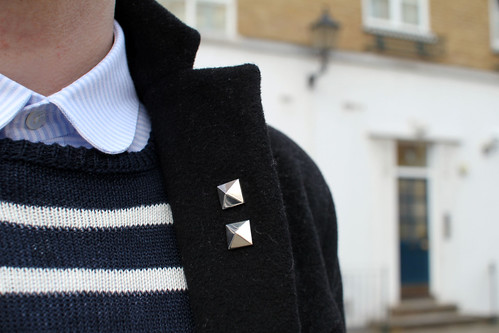
Two of the three pyramid studs worn with Crombie by ASOS Black, breton by E. Tautz and shirt by Patrik Ervell.  

Two of the three pyramid studs worn on the collar of Lanvin shirt under a sweater by COS

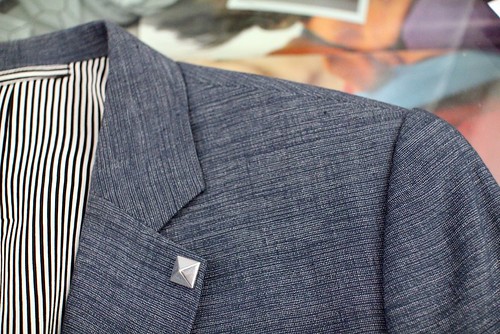
One of the three pyramid studs worn on the lapel of suit jacket by J.A Daye.

Inspired by Bunney's SS10 look book which showcase the likes of Clare de Rouen and Mr Hare wearing their choices extremely well and uniquely, I have strived to wear the studs a different way each day.  I might just be dipping one cautious toe in the the previously uncharted waters of jewellery but the likes of Andrew Bunney are tempting me to jump right in.